Enclosed Car Transport Across Europe
Shipping a high-value automobile over 1,500 kilometers of European motorways on an open multi-car transporter exposes delicate bodywork to unnecessary risk. Highway gravel, brake dust fallout from overhead decks, and variable alpine weather can quickly transform factory paint into an extensive remediation bill.
Enclosed automotive logistics provides absolute environmental isolation, discreet transit, and low-angle hydraulic loading designed expressly for machinery with minimal ground clearance or delicate aerodynamic diffusers.
Open vs. Enclosed Transport: Comparing Logistics Realities
Open multi-car transporters serve the mass automotive market efficiently. However, for historic sports cars, modern classics, and restored machinery, the differences are pronounced:
Open Multi-Deck Carriers
Vehicles exposed to highway grit, road salt spray, torrential rain, and corrosive brake dust dripping from vehicles positioned on upper vehicle decks.
- Lower base transportation rate per kilometer
- Frequent scheduled dispatches across major industrial freight corridors
- High risk of stone chipping, micro-marring, and weather staining
- Steep loading ramps prone to scraping low splitters and exhausts
Enclosed Dedicated Carriers
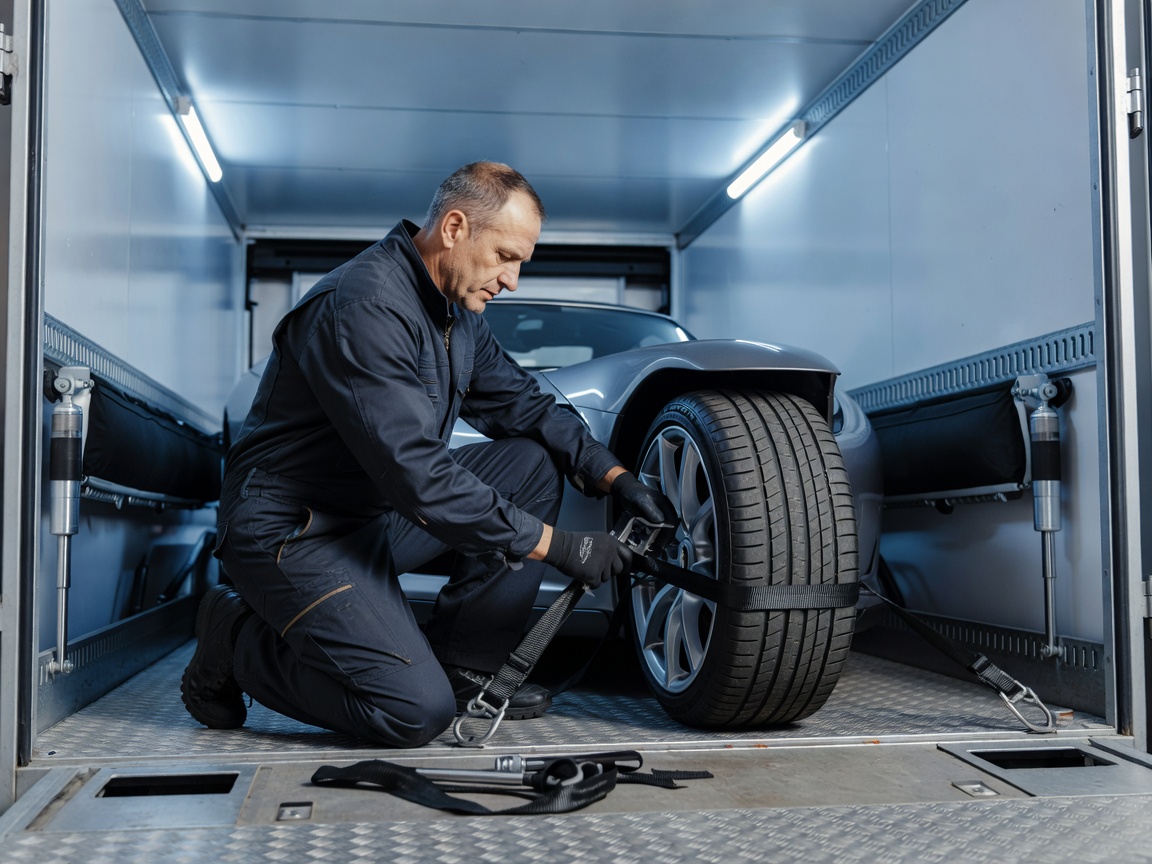
Vehicles secured within fully sealed, climate-sheltered trailers featuring air-ride suspension, electronic winches, and hydraulic tail-lifts.
- Complete isolation from gravel, weather, and environmental contaminants
- Near-flat approach angle accommodating track splitters and deep diffusers
- Total discretion and physical security during rest stops and border checks
- Higher initial logistical investment per transit mile
Low-Clearance Loading & Winching Protocol
A substantial portion of transport damage occurs during the first three meters of travel: traversing the loading ramp. Performance vehicles featuring extended front overhangs, low chin spoilers, or stiffened suspension geometry bottom out on conventional hinged ramps.
Dedicated enclosed carriers utilize full-width hydraulic tail-lifts that lower completely parallel to the tarmac. The vehicle enters the platform smoothly before elevating horizontally into the transport bay. Winching capabilities are equally crucial, enabling the gentle positioning of non-running restoration projects or high-strung vintage engines without necessitating harsh cold-engine starts simply to load.
The Standard of Over-Tire Webbing Restraint
Never permit a transport operator to secure performance machinery by clamping steel hooks or ratchet chains to suspension control arms or steering linkages. Dynamic roadway impacts can bend lightweight aluminum alloy components. Proper enclosed carriage mandates over-the-tire soft webbing straps anchored to slotted floor tracks, allowing the vehicle's natural suspension to absorb roadway undulations freely.
Pre-Departure Vehicle Preparation
Before the carrier arrives at the European collection address, systematic preparation guarantees transit safety and regulatory compliance:
- Fuel Level Management: Fuel tanks should remain at roughly 15% to 25% capacity. This reduces overall carriage weight and complies with maritime ferry and tunnel safety regulations while maintaining sufficient range for logistical maneuvers.
- Suspension Lock & Alarm Systems: Air suspension systems must be calibrated to transport lock. Interior motion and vehicle tilt sensors must be deactivated to prevent siren cycling and subsequent 12V battery drain over long transit legs.
- Accompanying Spare Components: Extra wheel sets, custom luggage, or detachable hardtops must be documented on the freight manifest and individually tethered. Loose items rolling within vehicle interiors during braking are strictly prohibited.
- Keys & Original Title Custody: Spare keys and original registration logbooks should be inventoried. For cross-border non-EU movements, original titles are carried in the driver's cab for immediate customs presentation rather than stowed inside the vehicle.
CMR Consignment Notes and Custodial Handover
Cross-border road freight across Europe is governed by the United Nations CMR convention (Convention relative au contrat de transport international de marchandises par route). The CMR consignment note represents the primary legal instrument between sender, carrier, and recipient.
At collection, a meticulous walk-around survey is conducted. Any pre-existing stone chips, wheel rim imperfections, or paint flaws are documented on the CMR bill of lading alongside date-stamped imagery. At final delivery, the recipient inspects the automobile against the initial CMR notation prior to signing acceptance, maintaining an unbroken custodial record.